By Bahk Eun-ji
When Iakovleva Anna, a 58-year-old administrative worker at a prison in Russia, witnessed her older sister fully recover from artificial joint surgery, she decided to get the surgery herself so that she too could walk properly.
Iakovleva had been unable to work due to the debilitating pains she feels in her hips. Yet, she has had to endure her condition due to the lack of qualified surgeons in many ill-equipped, local Russian clinics that have been unable to help her. In 2019, she finally flew to Korea to have the necessary operation on her leg at Himchan Hospital.
“The horrible pain on my left leg vanished right away after the surgery. Because of the dramatic result, I plan to get the operation on my right hip joint soon,” Anna said.
Specializing in joint and spinal surgery, Himchan Hospital began treating international patients from 2016, and more than 350 patients from Russia, China, and the United States have visited for treatment.
With advanced medical techniques and many satisfied foreign patients, Lee Su-chan, head of the hospital, had no reason to hesitate in opening branches abroad.
Himchan Hospital began offering its services in Bukhara, Uzbekistan, as the first jointly-operated hospital in Central Asia by a Korean medical institute.
“The Bukhara Himchan Hospital is the first medical institution opened by a private fund in Central Asia. It wouldn’t have been possible if it weren’t for the support from both the Korean and the Uzbekistan governments,” Lee said in a recent interview with The Korea Times.
“With the high preference of Korean doctors in Uzbekistan, we decided to set up a branch there to spread our advanced medical techniques by increasing the success rate of operations especially in the spinal and joint fields,” Lee said.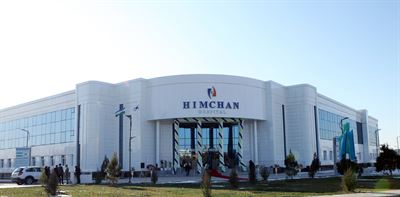 The hospital in Bukhara opened on Nov. 25, 2019, as a jointly-operated facility that provides orthopedic services, general internal medicine and neurosurgical procedures, thanks to exchange and cooperation between the Ministry of Health and Welfare in Korea and the Ministry of Health in Uzbekistan.
The two countries have expanded their collaboration since they signed a joint agreement of health and medical cooperation in August 2011.
Based on the agreement, the Korea-Uzbek Health and Medical Cooperation Center was opened by President Moon Jae-in visited the country in April 2019.
“Korean medical techniques have high credibility especially among people in the Uzbekistan. An official of the Ministry of Health in Korea is even serving at the medical center in Uzbekistan,” Lee said.
Lee Dong-wook, a former director of the population policy division at the health ministry, has also been working as a vice minister at the Uzbekistan Ministry of Health.
Lee Su-chan said he would not have even thought about opening the branch if there had been no support from two countries.
When Uzbekistan President Shavkat Mirziyoyev visited Korea in November 2017, Public Health Minister Alisher Shadmanov, who accompanied him, asked Lee to build the branch in Uzbekistan after visiting Himchan Hospital in Seoul. Soon after, the Uzbekistan government decided to provide the land for the hospital and the building free of charge.
The facility comprises a three-story, 8,925 square-meter building with 100 beds and six departments, including neurosurgery and orthopedics. The Korean health ministry also provided 360 million won in financial support for the hospital construction as one of its overseas medical projects initiated by the Korea Health Industry Development Institute. Himchan Hospital also invested about 10 billion won ($8.42 million) for building restructuring and medical equipment installation.
The hospital was already running two other overseas branches in Russia and the United Arab Emirates (UAE). Lee said around 70 percent of investment so far has come from private funding.
“In fact that it would have difficult to decide to go abroad if I only expected a high return on my investment. But I personally have pride in our medical techniques, and the sincerity and credibility of our doctors and medical teams will bring us success from overseas expansion in the healthcare industry in Korea,” Lee said.
In Uzbekistan, medical technology and the hospital system are relatively underdeveloped, and many patients are reluctant to have operations due to their Islamic cultural beliefs.
For example, spinal surgery sometimes requires using hemostasis, but the surgery can fail if the procedure cannot be used due to a shortage of drugs to produce this. A lack of surgical instruments necessary for artificial joint surgery is also one of problems Korean doctors have experienced there.
Lee thought that adopting the same medical system in Korea would be key to solving these problems in Uzbekistan, so the Bukhara branch is equipped with all the necessary medical equipment and tools.
The hospital has successfully conducted 37 spinal surgeries since it began treating patients Dec.7, with more patients in line for treatment.
“The number of surgery reservations has exceed 300, which reflects their trust in the service provided by the hospital,” Lee said.
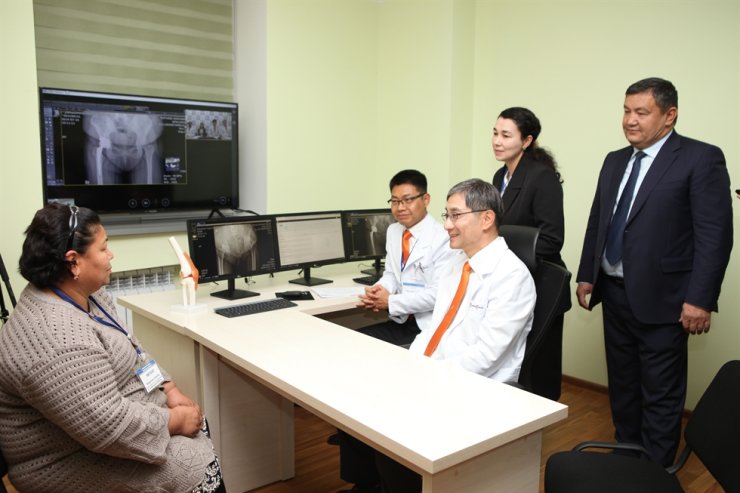
It has also established a remote video call system, through which doctors in Korea can directly diagnose patients in Bukhara. Himchan physicians based in Korea can first assess the patient’s condition through the video system and fly out to treat it if necessary.
Considering the high preference and trust of Korean doctors among patients in Uzbekistan, the hospital plans to continue to dispatch Korean doctors and focus more on educating and training local medical workers to improve their medical skills.
“We hope to create a medical hub in Uzbekistan by setting up the Korean medical system at Bukhara branch so that it plays the role of a bridge for medical exchanges between the two countries,” Lee said.