By Oh Young-jin
Numbers often seem to make things simple to understand, but sometimes you may believe them at your own peril. The ongoing coronavirus epidemic may well be one example. Here is what I think. After reading my argument, your conclusion is your own responsibility.
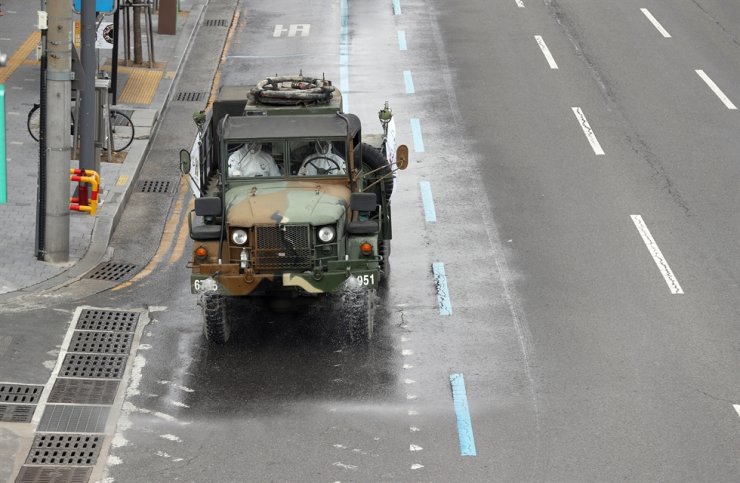
In Korea, which as of Friday has registered the most confirmed cases outside China, one of whose big cities, Wuhan, is the epicenter of the disease, people wearing masks are a common sight. There have been reports that big buildings found to have been visited by a patient are shut down for three days for disinfection, with residents under mandatory self-administered quarantine.
Ask one of those mask wearers about the coronavirus and their answers indicate a sense of fear, although the degree of it differs from one person to another.
As well as building shutdowns, the rapidly growing number of confirmed cases looks overwhelming with hundreds being added daily. The vague sense of insecurity can come from a coughing person sitting next to you on a subway seat or from the fear that someone in an eatery could have the virus or be a super spreader.
But I have done some unnecessary arithmetic to check the ratio and by extension the chance of contracting the disease. I used the numbers of patients for Thursday, not Friday’s updated ones, because, although each individual number is significant, it can still be ignored.
Korea’s epicenter, Daegu, has a population of 2.5 million, while the population of the surrounding North Gyeongsang Province is about 2.7 million. As of 9 a.m. Thursday, the province had 321 confirmed cases, producing a ratio calculated at 0.00012. For Daegu, there were 1,017 ― the ratio being 0.00041. That means 41 confirmed cases for every 100,000 people.
For Seoul, its surrounding Gyeonggi Province and Incheon, the populations are respectively 9.78 million, 12.3 million and 2.9 million. The confirmed cases were 55, 55 and three. This means 0.0000057 in Seoul; 0.0000045 in Gyeonggi Province; and 0.000001 in Incheon. This means 57 patients for 10 million; 45; and 10 respectively for these areas.
The 2016 rich countries club of the OECD report shows the death rate from traffic accidents in Korea was 8.38, the third highest among the 31 countries. Again, it is the number of deaths, not the number of patients as in the coronavirus numbers.
Now, the calculator inside your cranium tells you that there is little danger of you getting sick with it, but would you take comfort from this and take off your mask. That, I won’t recommend. If you take off your basic protective gear from your face and come down with what U.S. President Trump called the flu, don’t blame me. Blame him.